Your product
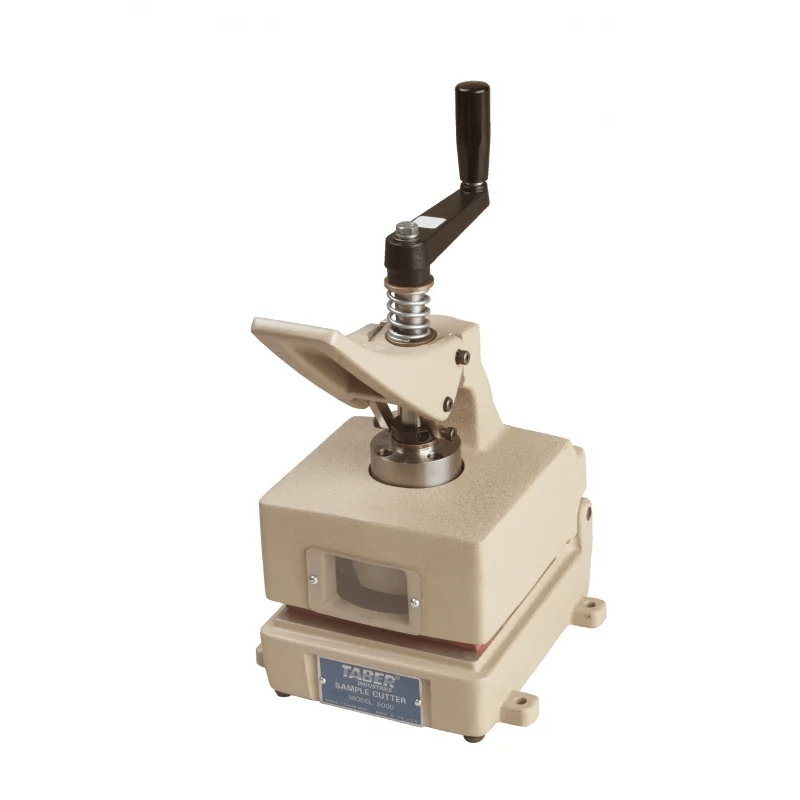
1700/1750 - Sample Cutter 5000



1700/1750 - Sample Cutter 5000
Die Probenvorbereitung für die Durchführung von Tests mit dem Taber Rotary Abraser (Abrader) 1700/1750 hängt von dem zu untersuchenden Material ab. Um wiederholbare und reproduzierbare Ergebnisse zu erzielen, sollten die Standard-Laborpraktiken befolgt werden.

Flexible materials
Most flexible materials can be processed with the Taber Sample Cutter (sample cutter) 5000 cut to size. This manually operated bench cutter uses an industrial cutting blade to prepare a sample with an exact diameter of 107 mm. A punching lever transmits the force evenly via a spring-loaded clutch to punch a 6.5 mm centre hole.
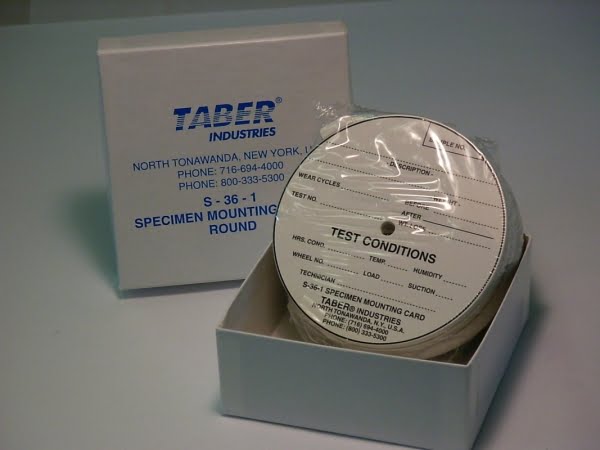
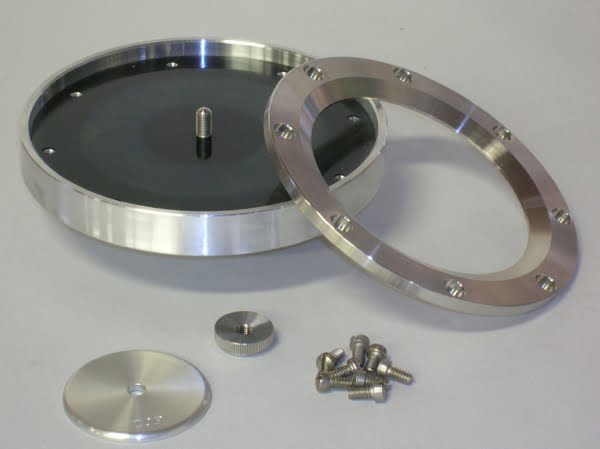
To prevent the sample from stretching or wrinkling during the test, flexible materials can be attached to the square mounting card S-36 or the round mounting card S-36-1. To prevent the vacuum from lifting the sample, it is recommended to use the sample holding ring.
Textile materials can also be prepared using scissors with an approximate size of 135 mm round or square. To cut out the centre hole, fold the sample twice and cut off a small part of the resulting corner.
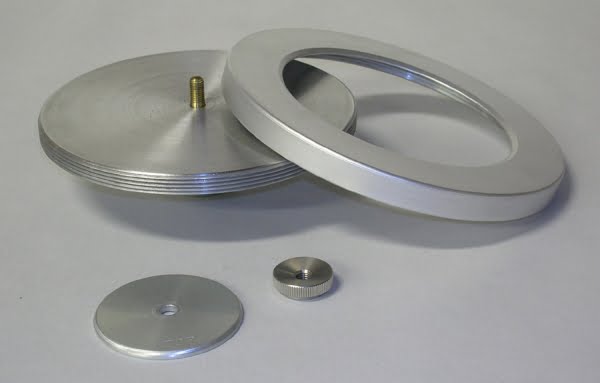
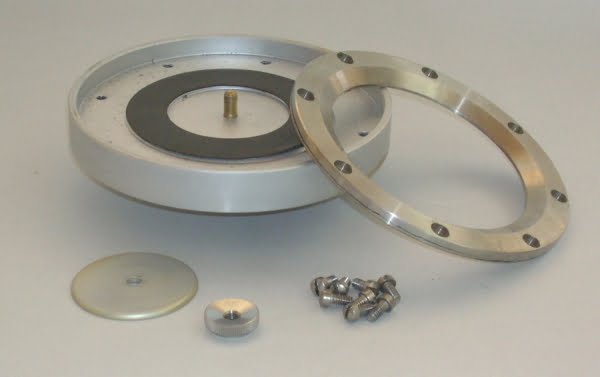
- Flexible materials are normally attached to the standard sample holder with the sample holder ring. The SH-101 specimen retaining ring (model E100-101 for older sanders) is suitable for flexible materials up to a thickness of 0.79 mm. The model SH-102 (model E100-102 for older sanders) is suitable for flexible materials up to a thickness of 1.59 mm.
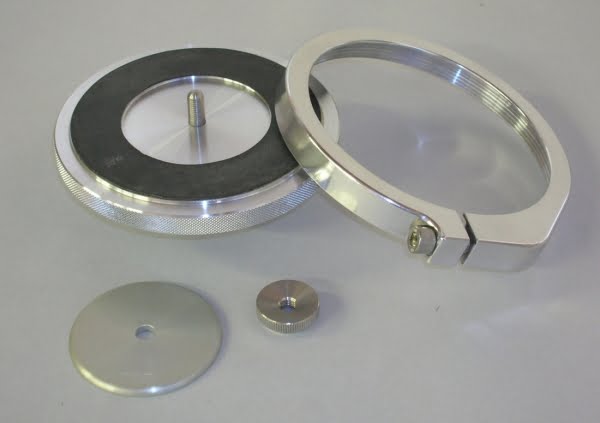
- To obtain usable data, the samples must not be stretched or creased. A Textile sample holder has a raised wear track to provide additional tension to the fabric when the ring is pulled over the edge of the holder and the clamping plate into the centre recess. See model SH-15 for Taber Abraser model 1700/1750 or E140-15 for older sanders.
- To subject samples to a wet abrasion test, the Textile holder, clamping type for wet or dry tests (E140-18) can be used. This holder is designed to pre-tension fabrics to minimise wrinkling so that they can be tested when wet. This sample holder is not compatible with the Taber Abraser Model 1700/1750.
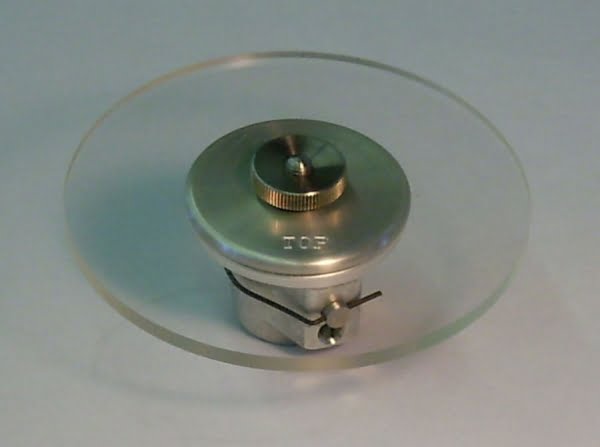
- A transparent table (E100-10) can be used to view textile samples in strong light to determine the worn condition of the threads without removing the fabric from the holder. Not compatible with Taber Abraser Model 1700/1750.
Rigid materials
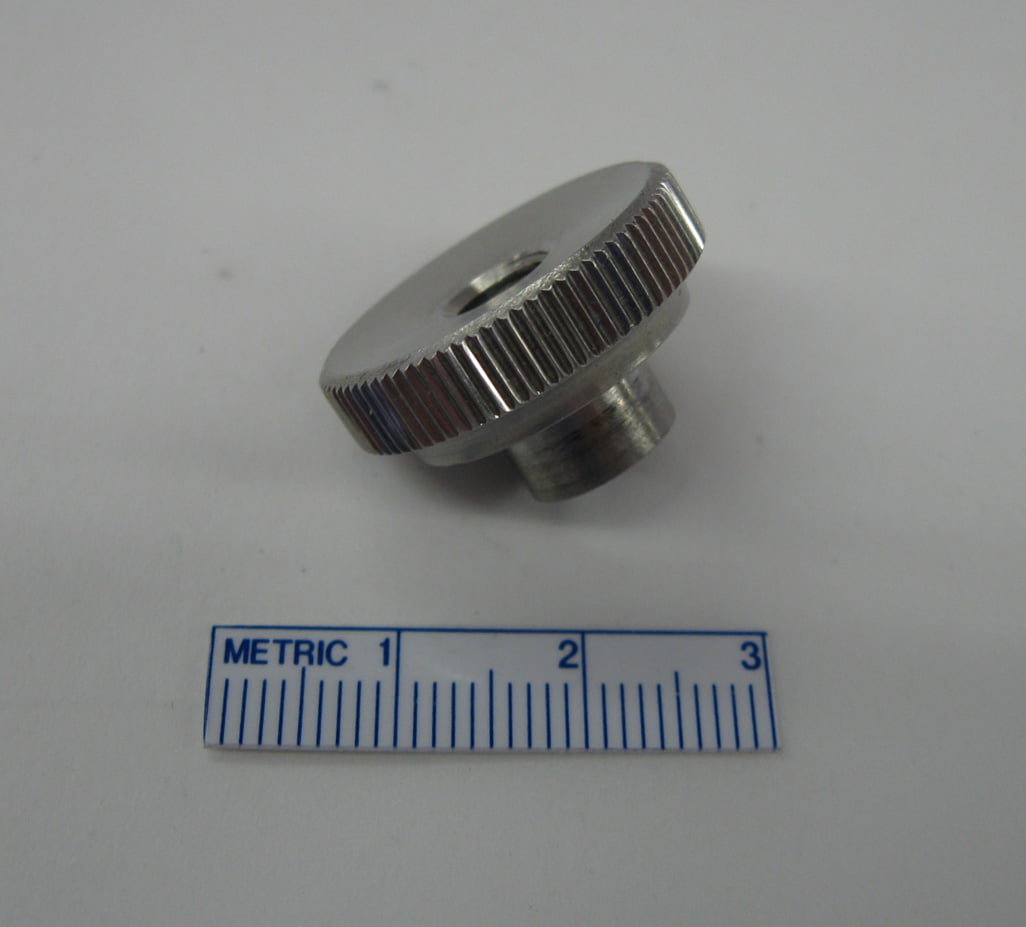
Rigid samples are often cut from a larger plate using a cutting method suitable for the material. A square specimen of 100 mm with a centre hole of 6.5 mm is recommended. The recommended specimen thickness is 6.5 mm. With the S-21 extension nut, samples with a thickness of up to 12.7 mm can be tested (9.5 mm centre hole required). With the modification of the arm height extension, specimens with a thickness of up to 40 mm can be tested (13 mm centre hole required). When preparing rigid samples, make sure that the top and bottom surfaces are flat and parallel.
- Rigid materials are usually attached to the standard specimen grip without the hold-down ring and require a 6.5 mm centre hole. For material thicknesses that require the S-21 extension nut, a 9.5 mm centre hole is required.
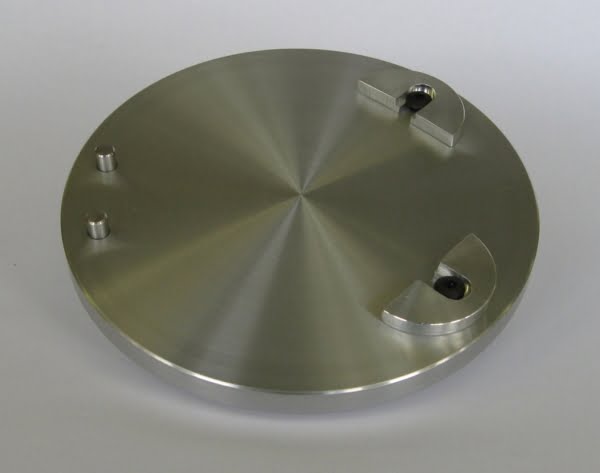
- It is possible to test samples without a centre hole by using the driving pin type holder. See Model SH-19 for Taber Abraser Model 1700/1750 or E140-19 for older abrasion devices.
- Samples with uneven thickness should be provided with a washer so that the top surface is flat. For testing slightly warped materials, a Ring clamp sample holder (E140-14) or a Ring sample holder with thread (E140-21) can be used. Both sample holders are not compatible with the 1700/1750 model Taber grinders.
- For wet abrasion testing of samples, the Edge sample holder can be used. This is useful to determine the effects of absorbed and/or surface moisture on abrasion resistance. Reference model SH-75 for Taber Abraser model 1700/1750 or E140-75 for older abrasion devices.
Cleaning the samples
The samples should be cleaned so that the surface is free of grinding dust, grease, fingerprints or other contaminants. As many different types of materials can be tested with the Taber Abraser (Abrader), no specific cleaning treatment can be given. If contact with solvents or cleaning agents leads to a change in the material properties, the surfaces can be cleaned with isopropyl alcohol or a soft cloth.
Conditioning of the samples
It is recommended to condition the samples in the test atmosphere for at least 24 hours before testing. Organic materials should be conditioned for 48 hours. The drying and curing conditions for printing or coating plastics and metals may vary and affect the test results. The curing of these samples must be carried out under the specific conditions of the respective material. Heat and humidity can also affect the physical properties of many materials. It is recommended that all tests be performed in the standard laboratory atmosphere of 23 ±2°C with 50 ±5% relative humidity.
Additional information
| brand | Taber |
|---|---|
| Mission | Laboratory |