Your product
TQC Sheen Wolff-Wilborn pencil hardness tester


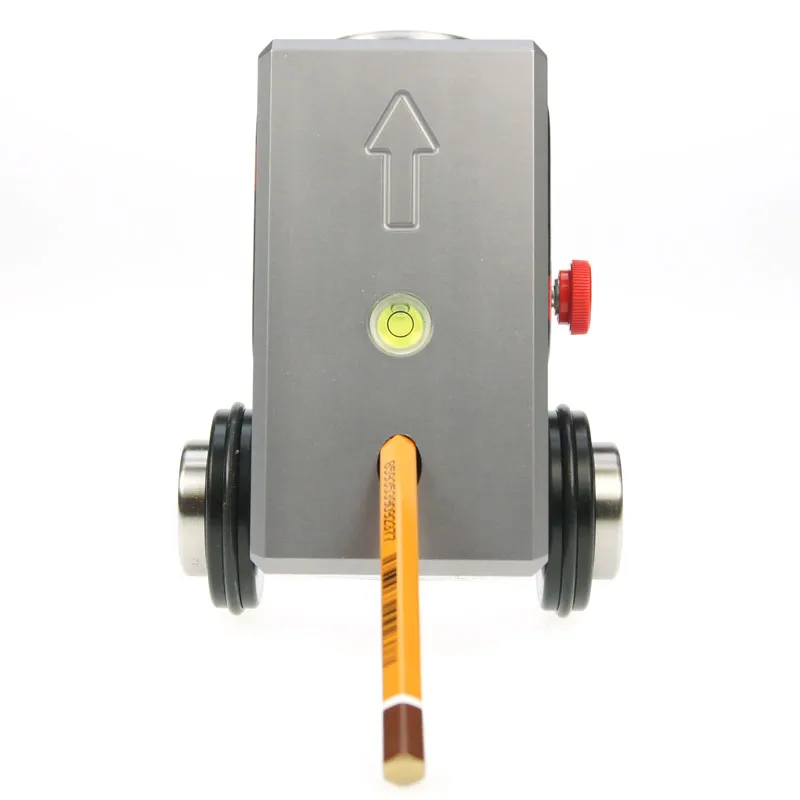


TQC Sheen Wolff-Wilborn pencil hardness tester
The TQC pencil hardness test according to Wolff Wilborn offers you a simple but effective method for testing the scratch hardness of coatings.
With our pencil hardness test, you can quickly and easily check the scratch hardness using the Wolff-Wilborn method.
Features & benefits
- Pencil hardness test according to international standards
- Minimises user influence and errors
- Different weight options available (500g or 750g)
- Supplied with a set of 20 Koh-i-noor pencils and a pencil sharpener
- Supplied with an aluminium box
Introduction to scratch hardness testing
The scratch hardness test is used to determine the resistance of coating materials or paints to the effects of scratching on the surface. It is a useful test for furniture or vehicle paints, but is also used in the development of synthetic resins and other film-forming materials.
In general, a scratch hardness test involves moving a sharp object over the test surface under a known pressure. The result can represent the value of the pressure required to score through the test material - if a constant hardness scoring tool is used. Or you can instead vary the hardness of the scribing tool while maintaining a constant pressure of 750g.
The Wolff-Wilborn pencil hardness test
One of the most common methods for determining coating hardness is the pencil hardness test using the Wolff-Wilborn method.
Our Wolff Wilborn hardness tester uses pencils with a hardness grade ranging from 8B to 10H. During the pencil hardness test, each individual pencil is scratched across the surface at an angle of 45° with constant pressure. A visual assessment shows which pencil hardness scale damages the surface and which does not.
Pencil hardness test kit
Our pencil hardness tester set consists of the pencil hardness tester, a set of 20 Koh-i-noor pencils, an aluminium metal box and a pencil sharpener. The scope of delivery also includes a manual and a calibration certificate.
Pencil hardness testing without great effort
Our Wolff-Wilborn pencil hardness tester moves the pencils over the surface of a sample under a fixed pressure and at a fixed angle. This ensures a minimum of operator error. The pencils can also be replaced to minimise downtime during testing.
Model overview
Supplied with manual and aluminium box. Calibration available, declaration of conformity and calibration certificate included
-
VF2379 Pencil hardness test according to Wolff Wilborn (500g)
There is no applicable standard, but the film industry and the LCD industry have their own standard (regulation) for testing with a load of 500g. Based on JIS-K5600
-
VF2378 Pencil hardness test according to Wolff Wilborn (750g)
Complies with the standards: ISO 15184, ASTM D3363, JIS K-5600, ECCA-T4-1, BS 3900-E19, SNV 37113, SIS 184187, NEN 5350, MIL C 27 227, EN 13523-4
-
VF2377 TQC pencil hardness test (750g + 1000g).
Special version with two weights. Complies with: ISO 15184, ASTM D3363, JIS K-5400, JIS K-5600, ECCA-T4-1, BS 3900-E19, SNV 37113, SIS 184187, NEN 5350, MIL C 27 227, EN 13523-4
Accessories
-
VF1003 Pencil sharpener for the Wolff-Wilborn hardness test
with special blade for use with the Wolff-Wilborn pencil hardness test. This pencil sharpener complies with ISO 15184 as the cylindrical pencil head remains intact.
-
VF1000 Set of 20 Koh-i-noor 1500 pencils
for use with the Wolff Wilborn hardness test in an aluminium case for use with the Wolff Wilborn hardness test. Pencils from 8b to 10H (8B, 7B, 6B, 5B, 4B, 3B, 2B, B, HB, F, H, 2H, 3H, 4H, 5H, 6H, 7H, 8H, 9H, 10H). The ISO 15184 standard applies to this Koh-i-noor 1500 pencil set.
Additional information
| brand | TQC Sheen |
|---|---|
| Mission | Haftungsprüfung, Härteprüfung, Kratztests |
| Industry sectors | !!! Painters Coaters Printers |
| Substrates/substances | Harze, Lacke, Oberflächen, Beschichtungen und Druckfarben, Verbundwerkstoffe |
| Standards | ASTM D3363, BS 3900-E19, ECCA-T4-1, ISO 15184, JIS K 5400, JIS K 5600, MIL-C-27-227, NEN 5350, SIS 184187, SNV 37113 |